Why Pull-Request Descriptions Matter
After 40+ years of writing software, one thing is consistent: code outlives context.
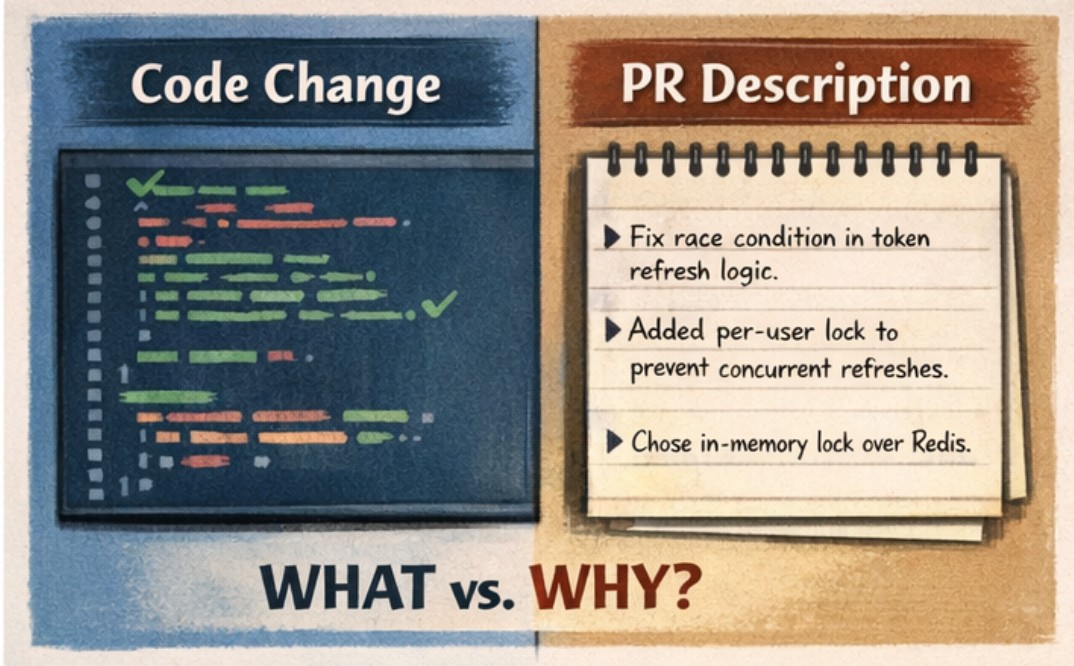
The code may be clean, well-factored, and tested—but without a pull-request (PR) description, the reason it exists disappears almost immediately. PR descriptions aren’t ceremony; they’re how we transfer understanding from one point in time to the next.
A diff shows what changed.
A PR description explains why it changed and why it looks the way it does.
That distinction matters, I’ll explain.
The importance of Why
It is not just a matter of describing what the code does – and in fact an AI Agent can analyze your code change(s) and easily summarize what it encompasses in well-structured prose. Furthermore, an AI Agent may be able to deduce the Why from the story behind the Work Item necessitating the change. However, getting AI to do it right and in a deterministic manner is a blog post on its’ own – and requires a solid understanding of Prompt Engineering.
Imagine a scenario where the code changes, then changes back to its original state, then changes again subtly or in significant functionality. Why? Was it wrong, or did the business objective change – or was the algorithm flawed? Not knowing the why can lead to unnecessary churn, redoing work already deemed wrong, and potentially additional maintenance effort and cycles.
What PR descriptions actually do
📌 They preserve intent
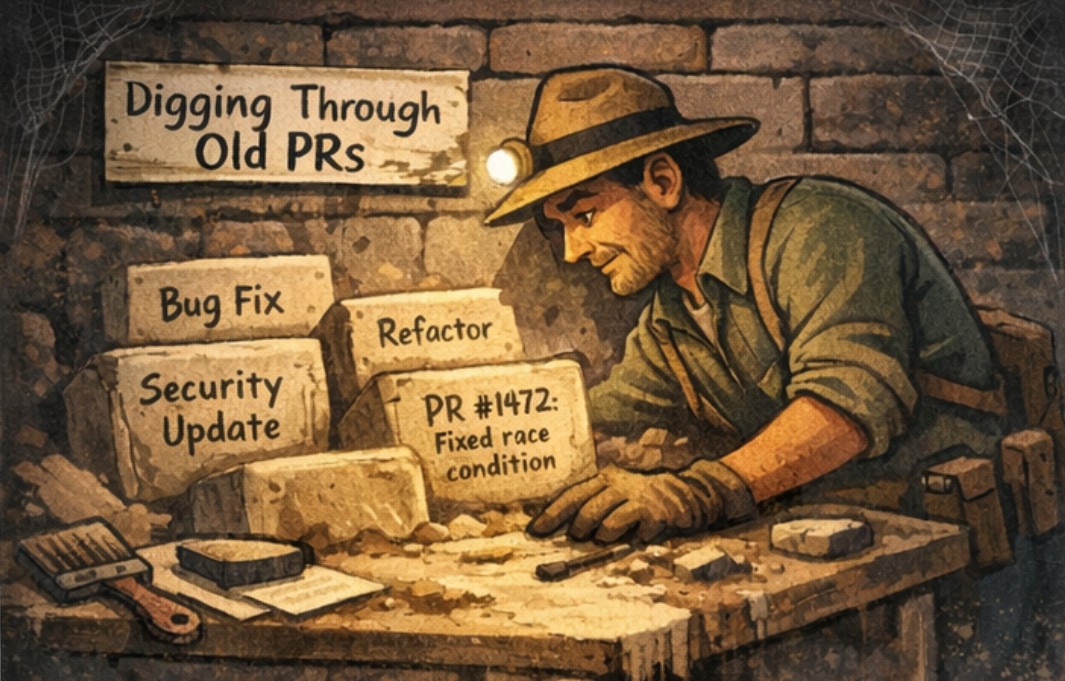
When someone encounters a piece of code six months—or six years—later, they don’t need to reverse-engineer the thinking behind it.
The PR description captures:
-
the problem being solved
-
the constraints in play
-
the decisions that shaped the solution
This is how knowledge survives beyond the original author, thus preserving context.
💡 They enable real code reviews
A good review isn’t about syntax or style—it’s about correctness, risk, and design fit.
A PR description:
- tells reviewers what to focus on
- avoids rehashing decisions that were already considered
- keeps reviews efficient and meaningful
Without it, reviewers are forced to guess, and guessing leads to either missed issues or unnecessary churn.
🔥 They reduce future rework
Most “mysterious” code isn’t bad code—it’s undocumented intent.
PR descriptions answer questions like:
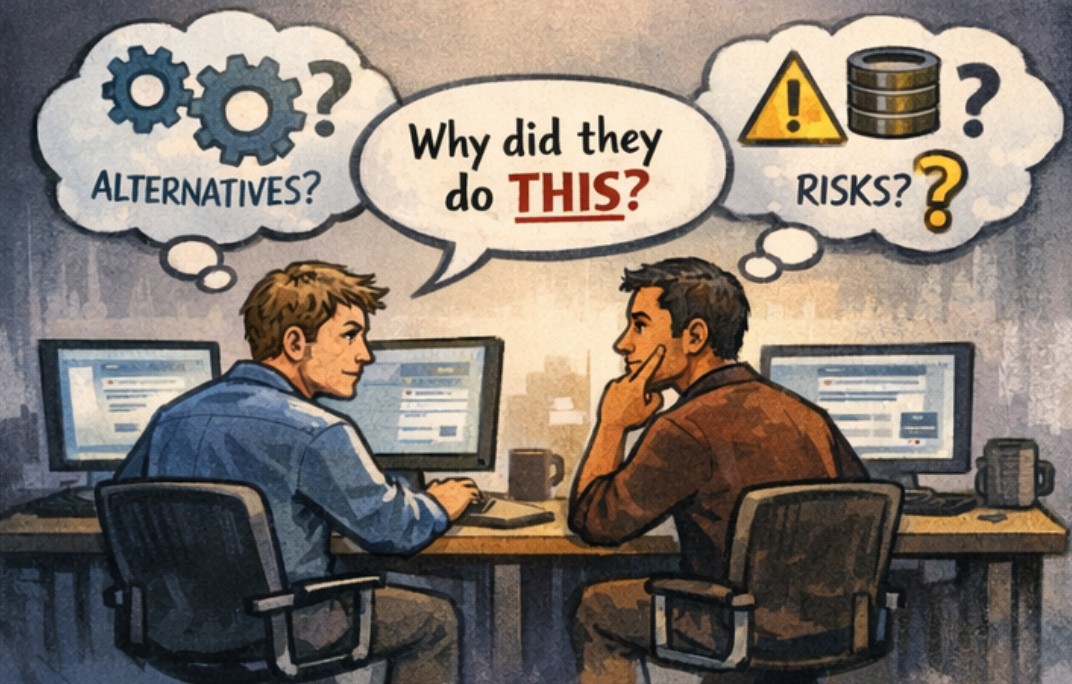
- Why didn’t we just do the obvious thing?
- Why is this check here?
- Why does this only partially solve the problem?
That context prevents well-intentioned developers from “fixing” something that was deliberate.
🚀 They support safe change at scale
As systems grow and teams rotate:
- not everyone was in the original discussion
- not everyone reviews every change
PR descriptions become a lightweight design record—especially important for security-sensitive, high-risk, or operationally critical changes.
How to craft a well written PR Description
A good PR description is concise, structured, and honest. It doesn’t narrate the diff—it explains the reasoning.
1. Start with the problem
Clearly state what’s broken, missing, or limiting. Why was this change made, for example:
- This change addresses a race condition in token refresh that could invalidate active sessions under load.
If you can’t explain the problem clearly, the solution probably isn’t clear either.
2. Explain the solution at a high level
Describe the approach, not the mechanics. The fix centralizes token issuance and introduces a per-user refresh lock to prevent concurrent refresh attempts. The code already shows how—this explains what and why.
3. Call out important decisions and tradeoffs
This is the most valuable part. An in-memory lock was chosen over a distributed lock because refresh operations are node-affined and short-lived. This prevents future engineers from re-debating solved problems.
4. Be explicit about impact and risk
If a change is risky, say so. This touches authentication and session handling. Deployment should ensure caches are cleared. Experienced engineers don’t hide risk—they surface it.
5. Say how it was tested
“Tested locally” is not information. Added unit tests for concurrent refresh scenarios and manually validated login/logout flows. This builds confidence and accountability.
6. Acknowledge limits or follow-ups
Good engineering is iterative. This does not address cross-device token revocation; that will be handled separately. Honesty beats false completeness.
📢 Final thought
Pull-request descriptions are how we write software that can be understood by people who weren’t there—including our future selves.
Good code is important.
Transferable understanding is what makes it last.